
Understanding calendar dates is vital for global event planning and cultural engagement. The Gregorian system, derived from the Julian calendar, governs most worldwide events with standard month lengths and leap years every four years (except for specific century years). In contrast, lunar calendars like the Islamic Hijri calendar align months with moon phases, causing variable lengths. These differences are crucial for international scheduling, financial management, and cultural awareness, especially during celestial events like solar eclipses. Leap year complexity requires careful planning in academia and industry, while consulting astronomical resources is essential for aligning events with supermoon occurrences. By navigating these variations, beginners can ensure successful event coordination and foster cross-cultural understanding.
In our interconnected world, understanding calendar dates across diverse cultures and systems is paramount for effective communication and accurate planning. The diversity of calendar methods, particularly when it comes to month lengths, can pose a significant challenge for beginners navigating international schedules and events. This guide aims to demystify this complexity by offering a comprehensive, beginner-friendly exploration of varied calendar approaches, with a focus on clarifying month lengths. By the end, you’ll possess the knowledge to confidently interpret dates in any context, empowering your global interactions and organization.
- Understanding Calendar Systems: An Overview
- Decoding Monthly Lengths: Solar vs Lunar
- Exploring Cultural Variations in Dates
- Key Concepts: Leap Years and Their Impact
- Practical Tips for Navigating Calendar Dates
Understanding Calendar Systems: An Overview

Understanding different calendar systems is a crucial step in navigating the complex world of dates and scheduling, especially for beginners delving into international events or local markets. Calendars are more than just tools to mark time; they often carry historical significance, reflect cultural practices, and shape our perception of seasons and events. For instance, the Gregorian calendar, widely used globally today, was established in 1582 to improve upon the Julian calendar, streamlining leap years for more precise astronomical calculations.
In many parts of the world, traditional or regional calendars coexist alongside the modern Gregorian system, each with its own unique rules and historical roots. These diverse calendars can significantly impact local markets and seasonal celebrations. Consider the Chinese lunar calendar, which determines the dates of traditional festivals like the Spring Festival (Chinese New Year), or the Hindu religious calendar, where specific days hold immense spiritual significance for festivals like Diwali. Understanding these variations is essential when planning international business meetings, participating in cultural events, or even organizing concert tours that cater to diverse audiences. For example, a music tour organizer needs to be mindful of local market seasons and historical date observances to ensure maximum attendance and engagement.
The interplay between calendar systems becomes particularly relevant when considering sporting events and global concerts. International sports leagues often adopt the Gregorian calendar for their schedules, while local concert dates may align with traditional festivals or cultural observances. This presents a unique challenge and opportunity for event planners and enthusiasts alike. To effectively manage sporting event schedules or plan a concert tour, it’s crucial to be aware of these variations. Give us a call at [Sporting Event Schedules] for expert guidance on navigating the complexities of global events, ensuring your plans are in sync with the calendar systems around the world. By understanding the historical and cultural contexts embedded in calendars, beginners can gain valuable insights into managing dates, connecting with diverse audiences, and appreciating the richness of global traditions.
Decoding Monthly Lengths: Solar vs Lunar

Understanding the length of months is a fundamental aspect of calendar navigation, especially for those new to different calendrical systems. When we talk about month lengths, it’s crucial to distinguish between solar and lunar calendars as they offer distinct approaches to measuring time. This dichotomy forms the basis for decoding monthly durations, which has profound implications in fields ranging from planning sporting event schedules to calculating dates for significant anniversaries and commemorations.
Solar calendars, like the Gregorian calendar most commonly used today, base month lengths on the Earth’s orbit around the sun – approximately 365 days. This results in months of varying length, with an average month lasting about 30.4 days. The practical consequence is that solar calendars can have months of 28, 30, or 31 days, making date calculation methods straightforward for most users. However, the sun’s cycle doesn’t precisely align with the phases of the moon, leading to occasional anomalies and the need for leap years every four years to keep our calendar in sync with the seasons.
Lunar calendars, on the other hand, determine month lengths based on the cycles of the moon – approximately 29.5 days from one new moon to the next. This results in months that are generally shorter than their solar counterparts and creates a more regular rhythm of 29 or 30-day months. The most well-known example is the Islamic Hijri calendar, where each month starts with the new astronomical moon, leading to more consistent month lengths. However, this lunar-based approach can cause issues when trying to align with solar seasons, necessitating occasional adjustments to maintain calendar accuracy over long periods.
To gain a practical understanding, consider that in a solar calendar year, there are about 12.35 solar months per 12 lunar months. This discrepancy highlights the challenges of harmonizing two distinct cycles. For instance, when planning a sporting event schedule spanning several years, understanding this difference becomes critical for ensuring events occur at consistent times relative to the seasons and not skewed by calendar systems’ inherent variations. Moreover, celestial events like solar eclipses provide a fascinating real-world example of these discrepancies; their timing depends on both the sun’s and moon’s positions in relation to Earth, making precise calculations essential and illustrating the intricate interplay between these calendars.
For beginners navigating different calendars, give us a call at anniversaries and commemorations to ensure your dates are accurate, especially when celebrating events tied to specific seasons or lunar phases. By understanding solar versus lunar month lengths, you gain valuable insights into calendar systems worldwide, enabling more precise date calculation methods and enhancing your ability to plan events, celebrate milestones, and appreciate the complex interplay of celestial bodies that underpins our timekeeping systems.
Exploring Cultural Variations in Dates
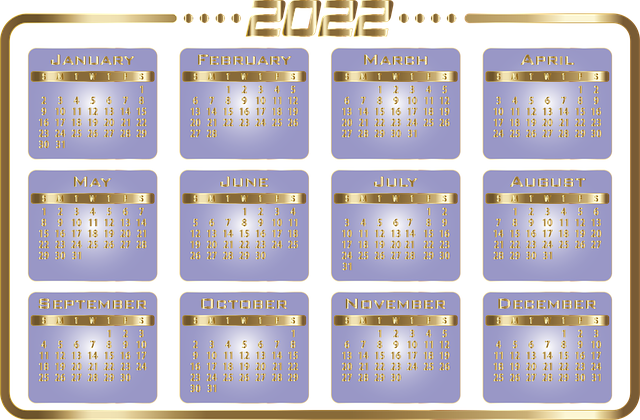
In exploring calendar dates, one quickly discovers a fascinating aspect of human culture: the variations in month lengths across different calendars. This isn’t merely an academic interest; it has profound implications for time management and planning, especially when considering international events, financial deadlines, and even finding us at book club reading schedules. The Gregorian calendar, widely used globally, establishes a standardized 30- or 31-day month framework. Yet, other cultures have devised unique calendars with distinct monthly structures. For instance, the lunar Islamic calendar features months that adapt to the moon’s cycles, resulting in variable lengths. This contrasts sharply with the solar-based Gregorian system, highlighting the diverse approaches societies have adopted to mark time.
Cultural variations in date calculation can significantly impact event ticketing deadlines and financial planning. In countries following the lunar calendar, such as China, festivals like the Spring Festival (Chinese New Year) fall at varying times each year based on moon phase, affecting global event scheduling and travel arrangements. For professionals involved in international business or tourism, understanding these variances is crucial for effective time management and meeting deadlines. Moreover, financial institutions must be sensitive to these calendar differences to ensure accurate tracking of interest rates, loans, and investment cycles, enhancing customer satisfaction and trust.
Practical advice for navigating these variations involves cultivating a robust understanding of different calendars, especially when engaged in global affairs or planning international trips. Utilizing digital tools that account for lunar and solar calendars can streamline this process. Additionally, staying informed about cultural events tied to specific calendar systems fosters sensitivity and appreciation for diverse traditions. For instance, knowing the timing of religious observances like Ramadan (in the Islamic calendar) can help individuals plan business meetings or travel itineraries accordingly, demonstrating respectful consideration for global counterparts.
Key Concepts: Leap Years and Their Impact

Understanding month lengths across different calendars can be a complex task, especially when considering leap years and their impact on calendar dates. A leap year, such as 2020, occurs every four years to synchronize the calendar with the Earth’s orbit around the sun. This additional day, February 29, introduces complexities that affect organizing academic schedules, planning events, and even movie release dates.
Leap years are not simply added to ensure an exact match with the solar year; they require careful calculation. The Gregorian calendar, widely used today, employs a leap year rule that states any year evenly divisible by four is a leap year, except for years ending in century, which require further scrutiny. This means 1700, 1800, and 1900 were not leap years, while 2000 and 2400 are. These exceptions highlight the need for meticulous planning when dealing with calendar dates and their corresponding month lengths.
For beginners navigating different calendars, managing academic schedules can be a challenge. Universities often use specific calendar systems that may differ from the standard Gregorian calendar. When organizing courses, exams, and breaks, students must be mindful of leap year complexities to avoid scheduling conflicts or miscalculations. For instance, a student planning their academic calendar for a semester starting in 2024 should account for the extra day in February, ensuring a smooth and well-organized schedule.
To streamline this process, consider leveraging project deadline tracking tools available online. These platforms can help manage not only academic schedules but also event planning and even personal milestones, ensuring you never miss a beat. For instance, a tool like [Project Deadline Tracking] (visit us at any time for more information) can offer insights into the best times to launch campaigns or organize events based on calendar date variations across different systems. By embracing these practical strategies, beginners can confidently navigate the intricacies of month lengths and leap year complexities in various calendars.
Practical Tips for Navigating Calendar Dates
Navigating calendar dates can be a confusing affair, especially when considering the diverse range of calendars used worldwide and the varying lengths of months. As a beginner, understanding these nuances is essential for accurate planning and scheduling. One practical tip to grasp the complexity is to recognize that month lengths are not uniform across all calendars. For instance, while the Gregorian calendar, widely used globally, consists of 12 months with varying length, some lunar calendars have 13 months in a year, resulting from the approximation of lunar cycles to solar years.
Consider the lunar-based Islamic Hijri calendar, where each month starts with a new crescent moon sighting. This leads to irregular month lengths, averaging approximately 29 or 30 days, which can significantly impact registration opening and closing dates for local market seasons. For event planners and enthusiasts, keeping these variations in mind is crucial when scheduling activities aligned with supermoon occurrences, known for their heightened allure and popularity.
To make practical use of this knowledge, users can consult astronomical resources like us at astronomy observation windows to stay informed about supermoon cycles. Additionally, being mindful of calendar discrepancies ensures smooth coordination during registration processes, whether for community events or seasonal markets. By understanding these dynamics, beginners can confidently navigate calendar dates and plan ahead effectively, avoiding potential pitfalls associated with inconsistent month lengths.
By exploring various calendar systems, decoding the differences between solar and lunar months, understanding cultural variations in date interpretation, and grasping key concepts like leap years, readers now possess a robust framework for navigating complex calendar dates. This guide’s practical tips offer valuable tools to minimize confusion and maximize accuracy in managing personal and professional obligations tied to specific calendar dates. With this newfound authority on calendar dates, individuals can confidently engage with global communities, plan events effectively, and ensure timely execution of tasks across diverse cultural contexts.