
GPS technology revolutionizes timekeeping with unprecedented global precision, offering accurate calendar date and time synchronization through orbiting satellites. This enables seamless coordination for international events, businesses, and researchers, enhancing accuracy in various applications from concert planning to tax deadlines, fostering a universally connected and timed world.
In the modern era, accurate timekeeping is paramount for synchronizing global activities—from financial markets to space exploration. However, traditional methods often fall short when dealing with dynamic environments. This is where GPS technology emerges as a game-changer, offering unprecedented precision in timekeeping. By leveraging satellite signals and sophisticated algorithms, GPS systems can determine the calendar date and time with remarkable accuracy, down to the nanosecond. This article delves into the intricate mechanisms behind GPS’s enhanced timekeeping capabilities, providing valuable insights for professionals seeking meticulous temporal synchronization in our increasingly interconnected world.
- Understanding GPS: The Foundation of Timekeeping Precision
- Satellite Signals: How GPS Tracks Time Across Calendars
- Refining Time Measurement: GPS's Role in Enhanced Accuracy
Understanding GPS: The Foundation of Timekeeping Precision

GPS technology has revolutionized timekeeping by providing an unprecedented level of precision, particularly when it comes to coordinating events on a global scale. Understanding how GPS contributes to this accuracy is crucial for various applications, from concert tour dates and astrological sign calculations to financial deadlines and calendar date management.
At its core, the Global Positioning System (GPS) uses a network of satellites orbiting the Earth to pinpoint locations with remarkable exactness. Each satellite transmits signals that include the current time, allowing ground receivers to calculate their position by measuring the time it takes for these signals to travel from the satellites to their antennas. This principle of triangulation ensures a high level of accuracy in determining both geographical and temporal coordinates. For example, when planning a concert tour, knowing precise start and end dates globally is essential for efficient logistics management.
The integration of GPS technology into timekeeping systems offers significant advantages. It enables the creation of highly accurate atomic clocks that form the backbone of modern time standards. These clocks are synchronized with GPS signals, ensuring that the calendar date and time across different locations are precisely aligned. This synchronization is vital for coordinating events worldwide, especially when considering astrological sign dates, which have cultural and commercial implications. By leveraging GPS, we can ensure that financial deadline awareness, concert promotions, and even traditional astrological calculations align accurately with the calendar year.
In practical terms, this means that event organizers can plan global concerts with confidence, knowing that time zones and local calendar dates will be handled precisely. It also benefits businesses operating internationally by streamlining processes related to term start and end dates, ensuring compliance and timely execution. By embracing GPS-enabled timekeeping, we find ourselves at the forefront of a more accurate and globally connected era, where calendar date management is as precise as ever.
Satellite Signals: How GPS Tracks Time Across Calendars
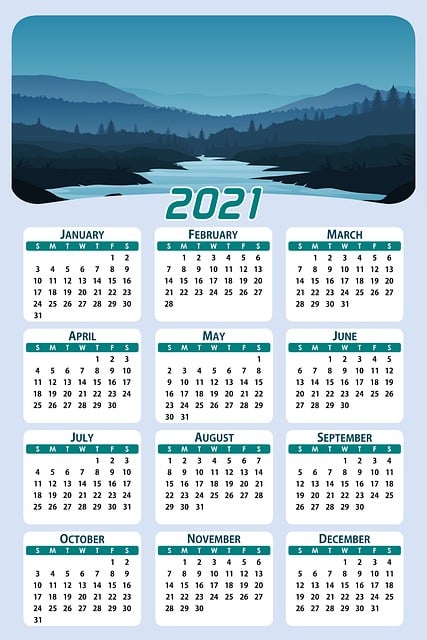
GPS technology has revolutionized timekeeping by offering unprecedented precision and global reach. One of its most sophisticated applications lies in the way it tracks and synchronizes calendar dates across diverse time zones and cultural calendar systems worldwide. GPS satellites, orbiting at an average altitude of 12,550 miles (20,200 kilometers), constantly transmit signals that enable incredibly accurate timing. This is crucial for maintaining global coordination, especially when marking significant events and planning vacation timelines.
The GPS system uses a network of 31 satellites, strategically placed in orbit to provide coverage worldwide. Each satellite carries highly precise atomic clocks, which measure time with remarkable accuracy—on the order of a few nanoseconds per day. When a GPS receiver on Earth calculates its distance from multiple satellites using trilateration, it can determine both its location and the current time with exceptional precision. This capability is particularly beneficial for events that span multiple time zones, ensuring accurate synchronization without the need for manual adjustments.
Furthermore, GPS-based timekeeping plays a vital role in the transition between calendar systems worldwide. With various cultures adopting and modifying the Gregorian calendar, maintaining precise time synchrony can be complex. GPS signals provide a universal standard, facilitating seamless coordination for international events, meetings, and conferences. For instance, when planning global webinars or online meetings, leveraging GPS-derived time ensures that participants from different parts of the world join at exactly the right moment, enhancing collaboration and participation rates.
Refining Time Measurement: GPS's Role in Enhanced Accuracy

GPS technology has revolutionized timekeeping accuracy, offering a level of precision previously unattainable. At its core, GPS relies on signals from satellites orbiting Earth, providing incredibly precise temporal data. This technology measures the time it takes for signals to travel from satellites to GPS receivers, calculating location and time with remarkable exactness. The refinement in time measurement afforded by GPS is particularly beneficial in various applications where minute variations matter greatly.
Consider the impact of this enhanced accuracy in practical scenarios. During critical events like solar eclipse observations, precise timing is essential for scientists and astronomers. GPS-enabled devices can provide real-time, accurate temporal data, ensuring researchers capture every detail of these rare celestial occurrences precisely on the calendar date they occur. Similarly, tax filing dates and project deadline tracking benefit from this advanced technology, as it allows for meticulous record-keeping and precise compliance with time-sensitive regulations.
In the context of everyday life, GPS improves not only navigation but also synchronizes various digital devices and services. This synchronization ensures that book club reading schedules, for instance, remain coordinated among members, regardless of their physical locations. By providing a universal, highly accurate time reference, GPS plays a pivotal role in maintaining consistency across our modern interconnected world, making it an indispensable tool for achieving unparalleled temporal precision.
GPS technology significantly enhances timekeeping accuracy by leveraging satellite signals to track time across various calendars with unprecedented precision. Understanding how GPS systems decipher and transmit these signals is key to appreciating their role in refining time measurement. This article has illuminated the intricate process, demonstrating that GPS not only provides location data but also offers a highly reliable method for synchronizing clocks globally. By integrating GPS technology, institutions can ensure precise timing for critical operations, from scientific research and financial transactions to navigation systems and communication networks. Embracing this innovation allows us to navigate the modern world with enhanced accuracy, where calendar dates are synchronized with unparalleled clarity.