
Calendars have evolved from rudimentary abacus systems to sophisticated digital tools, reflecting humanity's quest for order and efficiency in managing time. Early civilizations developed solar and lunisolar calendars using celestial observations and agricultural cycles. Greek and Roman worlds integrated astronomical phenomena into global calendar systems. Mechanical clocks revolutionized timekeeping, leading to precise scheduling and leap year calculations. The Industrial Revolution standardized calendar dates, while electronic technology introduced real-time updates and global synchronization. Today, digital calendars offer unparalleled flexibility for managing appointments, events, and deadlines globally, integrating with financial software for improved awareness.
In an era where technology evolves at a rapid pace, understanding the evolution of our timekeeping systems, particularly calendars, offers a fascinating glimpse into humanity’s relentless pursuit of precision and organization. The calendar date has long served as a cornerstone for societies worldwide, structuring our days, weeks, months, and years. However, the journey from primitive abacus-based counting to the digital clocks of today highlights not just technological advancements but also cultural shifts and historical milestones. This article delves into this captivating evolution, exploring the diverse methods humanity has employed to measure time and their profound impact on our lives.
- Ancient Origins: The Birth of Timekeeping
- From Abacus to Sun Dial: Early Innovations
- Revolutionizing Time: Mechanical Clocks Emerge
- The Industrial Age: Calendars Go Mass-Produced
- Digital Era: Transforming Calendar Date Tracking
Ancient Origins: The Birth of Timekeeping

The evolution of calendars, a testament to humanity’s enduring quest for order and structure, traces back to ancient civilizations where timekeeping was not merely an abstraction but a vital tool for survival. The earliest forms of calendar systems emerged independently in various regions, reflecting diverse cultural perspectives on measuring time. These early innovations laid the foundation for our modern understanding of calendar dates and would eventually lead to the intricate mechanisms of today’s digital clocks.
In ancient Egypt, for instance, the calendar was intricately tied to the river Nile’s annual flooding cycle. The Egyptians developed a solar calendar, one of the earliest known systems, which roughly mirrored the 365-day cycle of our modern Gregorian calendar. This method involved meticulous observations of celestial bodies and their impact on agricultural cycles, ensuring that festival periods, such as those celebrated in museum exhibitions showcasing ancient artifacts, were accurately timed. Similarly, ancient Mesopotamians utilized a lunisolar calendar, combining lunar months with solar years, which was crucial for predicting the dates of seasonal events like the harvest.
As civilizations advanced, so too did their timekeeping methods. The Greek and Roman worlds introduced more complex mathematical concepts to calendar calculation, leading to precise date determinations. This period saw the birth of various astronomical phenomena being used as markers for calendar dates—the phases of the moon, solar eclipses, and constellations were all incorporated into calendar systems worldwide. These early innovations, while primitive by today’s standards, formed the intricate tapestry of timekeeping that would later inspire more sophisticated mechanisms. Visit us at the art festival calendars to explore these fascinating historical roots firsthand.
From Abacus to Sun Dial: Early Innovations

The evolution of calendars begins with some of humanity’s earliest innovations. One of the most primitive calendar systems known is the Abacus, a simple counting tool that allowed early civilizations to track days and dates. This manual method was a significant step towards organizing time, enabling people to plan personal events, such as festivals and religious ceremonies, and even mark important anniversaries and commemorations. As human societies became more complex, so too did their need for accurate calendar systems.
Transitioning from the Abacus, one of the most remarkable early innovations is the Sun Dial. This device harnessed the power of the sun to tell time with surprising accuracy. By casting shadows on a marked dial, people could determine the hour of the day, which was crucial for agricultural planning and aligning movie release dates during seasonal changes. The Sun Dial represented a significant leap forward in temporal measurement, providing a more precise way to keep track of calendar dates and facilitate various activities that depended on accurate timekeeping.
These early innovations laid the groundwork for more sophisticated calendar systems that emerged over centuries. Today, we take digital clocks and calendars for granted, with smartphones and computers enabling us to manage our schedules with unprecedented ease. However, understanding how far we’ve come—from the Abacus to sophisticated digital tools—is a reminder of humanity’s relentless pursuit of efficiency and precision in managing time. As we continue to evolve, tools like digital calendars not only enhance our personal lives but also play a vital role in organizing collective events and commemorations, ensuring that we stay aligned with tax filing dates and other important calendar date milestones.
Revolutionizing Time: Mechanical Clocks Emerge
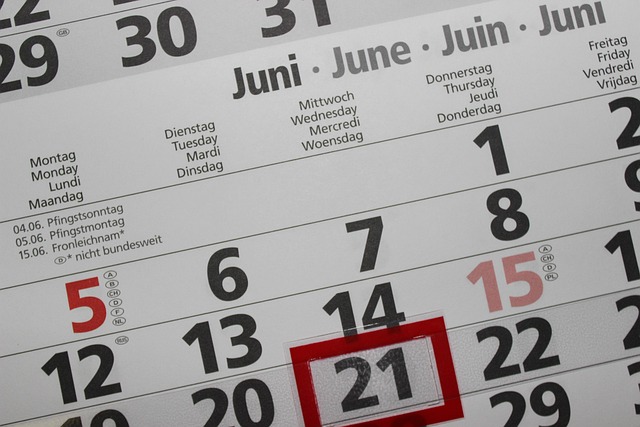
The evolution of calendars is a fascinating journey through human history, reflecting our increasing mastery over time and its measurement. From the earliest abacus-based systems to today’s digital clocks, each innovation has revolutionized how we understand and organize our days, weeks, months, and years. One pivotal moment in this evolution was the introduction of mechanical clocks, which dramatically transformed the way we conceptualize and track calendar dates.
Mechanical clocks emerged during the 13th century, marking a significant leap forward from simple sundials and water clocks. These new timepieces utilized intricate mechanisms powered by weights and springs to accurately measure time intervals. The invention of the mechanical clock was not just a technological feat; it also had profound implications for society. It allowed for more precise scheduling of daily activities, including organizing academic schedules, religious services, and even solar eclipse events, which had been previously unpredictable due to the limitations of natural clocks. The accuracy of these new clocks ensured that calendar dates could be synchronized across vast distances, fostering a sense of global time that had previously been fragmentated.
Moreover, mechanical clocks played a crucial role in addressing the complexities of leap year calculations. The need for adjusting the calendar to align with the Earth’s orbit around the sun—a practice required to prevent seasons from drifting—became more manageable with these new timekeepers. While early mechanical clocks were elaborate and expensive, their reliability and precision gradually made them accessible to various social classes, further entrenching their importance in daily life. By the 16th century, clockmakers like Gilber de La Salle were crafting intricate mechanisms that could account for leap year complexities, demonstrating the growing sophistication of these time-telling devices.
As we moved into the modern era, the evolution continued with the advent of electronic and digital clocks, which further enhanced our ability to track time with unprecedented accuracy. Today, digital clocks are omnipresent, from smartphones to global positioning systems (GPS), allowing us to manage our schedules with a precision that would have seemed fantastical to our ancestors. This ongoing revolution in timekeeping underscores the relentless pursuit of accuracy and efficiency that has shaped not only our understanding of calendar dates but also our daily lives, making us more adept at managing our time and synchronizing our activities across the globe.
The Industrial Age: Calendars Go Mass-Produced
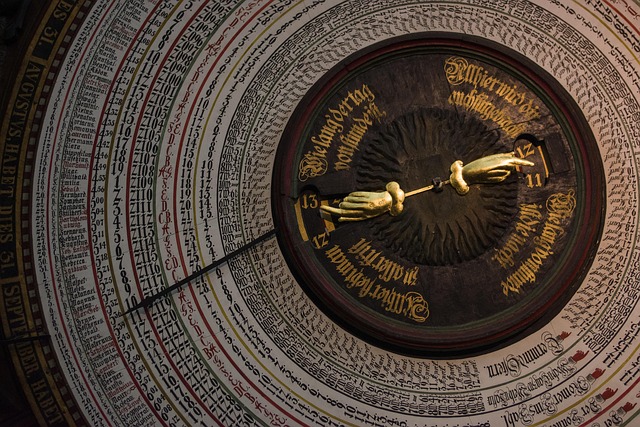
The Industrial Revolution marked a significant turning point in the evolution of calendars as they transitioned from simple abacus-based systems to mass-produced mechanical and eventually digital timekeepers. This era witnessed the birth of standardized calendar dates that we rely on today, revolutionizing how societies organized their daily lives, events, and long-term planning. The advent of steam power and mechanization played a pivotal role in this transformation, allowing for the creation of intricate clockwork mechanisms that could accurately track solar eclipse events and weather patterns, crucial for agricultural and economic planning.
Mass production techniques introduced during this period enabled the calendar to become an accessible tool for the masses, moving beyond the realm of elite elites and academic institutions. Manufacturers began producing calendars in large quantities, incorporating innovative features such as weather-based planning aids and elaborate artistic designs that appealed to a broader audience. This democratization of timekeeping had profound implications, fostering more effective weather-based agriculture and commerce while also providing people with a tangible way to track the passage of time in their daily lives. The Industrial Age’s emphasis on precision and efficiency permeated into calendar design, leading to improvements in leap year calculations that addressed the complexities associated with these rare yet significant events.
As we moved further into the 20th century, the advent of electronic technology paved the way for digital clocks and calendars, fundamentally altering our relationship with time once again. Digital displays offered unprecedented accuracy and functionality, enabling real-time updates and global synchronization. This evolution was not merely about aesthetics or convenience; it reflected a deeper societal shift towards instant access to information, as evidenced by the rise of book club reading schedules that now seamlessly integrate digital calendar date features. Today, we find ourselves in an era where smart devices can not only display current calendar dates but also anticipate and alert us to upcoming events, solar eclipse occurrences, and even suggest optimal times for various activities based on weather forecasts. This ongoing evolution underscores the enduring significance of calendars in shaping our lives and how they continue to adapt to meet the ever-changing demands of modern society.
Digital Era: Transforming Calendar Date Tracking

The Digital Era has fundamentally transformed how we track calendar dates, marking a significant shift from traditional methods to innovative digital solutions. This transformation is not merely about convenience; it reflects a deeper integration of technology into our daily lives and its profound impact on various aspects of human endeavor, including cultural celebrations, agricultural planning, and even financial management.
The evolution of calendar date tracking has always been driven by the need for precision and organization. From the ancient abacus to today’s digital clocks, each advancement has aimed to streamline the complex task of measuring time. In the past, cultural celebrations and agricultural planting seasons were closely tied to celestial events, with calendars serving as vital tools for navigating these timelines. For instance, many agrarian societies relied on lunisolar calendars that accurately predicted solar and lunar cycles, enabling them to plan their crops effectively.
However, the advent of digital technology has introduced unprecedented complexities into calendar management. Leap year calculations, once manual and prone to errors, are now readily handled by sophisticated algorithms. This precision is crucial for maintaining synchronization with global time standards, ensuring that our calendar dates accurately reflect Coordinated Universal Time (UTC). Moreover, digital calendars offer unparalleled flexibility in managing appointments, events, and reminders, allowing users to effortlessly juggle multiple responsibilities.
As we move forward, it’s essential to recognize the interdependence of technology and human culture. Digital calendars have become integral to planning cultural celebrations, from tracking festival dates based on lunar cycles to organizing community events that span across countries. By embracing these advancements, we not only streamline our daily lives but also foster a deeper appreciation for the rich tapestry of global traditions. For instance, financial deadline awareness becomes more accessible when calendar tools can seamlessly integrate with accounting software, giving us a call at Financial Deadline Awareness to help manage these intricate financial timelines effectively.
Throughout history, calendars have evolved from simple abacus counting to intricate digital clocks, reflecting humanity’s relentless pursuit of precise timekeeping. From ancient origins to the digital era, each innovation in calendar date tracking has reshaped our understanding and interaction with time. Key takeaways include the pivotal role of mechanical clocks in revolutionizing time measurement, the mass production of calendars during the Industrial Age, and the transformative impact of digital technology on modern calendar date systems. These advancements underscore humanity’s constant drive to improve efficiency and accuracy, empowering us to navigate our daily lives with greater precision. Moving forward, embracing digital calendar tools offers practical next steps for enhancing personal organization, global communication, and cross-cultural coordination, solidifying the article’s authority on this timeless yet ever-evolving topic.